Ways to work together
Build Wealth
With Intention
Thoughtful financial guidance, transformative education, and purpose-led strategy for individuals, families, organizations, and communities ready to move forward with greater clarity.

More than financial advice
A Clearer Path From Where You Are to Where You Want to Be.
Financial transformation begins when practical strategy is paired with an honest understanding of your experiences, responsibilities, priorities, and vision.
Dr. Nicole Brielle brings more than three decades of financial industry experience together with education, leadership, faith, and lived experience. Her approach helps clients make informed decisions while building confidence in their ability to navigate change.
Whether you are establishing your foundation, preparing for a new season, recovering from disruption, or leading an organization, the work begins with clarity and moves toward purposeful action.
The Framework
Three moves. One foundation.
Every episode, every teaching, and every step of the community walks the same proven path; in order, at your pace.
PILLAR One
Start where you're standing
Get honest about where you are; the habits, the history, and the financial trauma underneath them. You cannot build on ground you refuse to survey.
PILLAR two
You are a business
W-2 or entrepreneur, you are an enterprise of one. Learn the tax strategy, structure, and stewardship that turn income into an economy.
PILLAR three
Your place in your family dynamics
Legacy is a group project. Understand your role in the bloodline; aging parents, rising children and plan so no crisis undoes a generation of building.
Core services
Guidance Designed Around Your Real Life.
Each engagement begins with a focused conversation to understand your needs, determine the appropriate service, and establish a thoughtful path forward.
For individuals and families
Financial Planning & Wealth Strategy
Comprehensive guidance designed to help you understand your financial position, organize your priorities, prepare for uncertainty, and make informed decisions about the future.
Financial goal-setting and priority development
Cash-flow and savings strategy
Investment planning and portfolio conversations
Retirement and long-term wealth planning
Risk-management and protection considerations

For every stage of the journey
Wealth Education & Financial Empowerment
Accessible, practical education that helps people understand the principles behind wealth-building and apply them in ways that align with their own lives.
Foundational financial literacy
Understanding saving, investing, and compound growth
Money beliefs and financial decision-making
Preparing children and families for generational wealth
Educational seminars and learning series
After disruption or transition
Financial Recovery & Resilience Guidance
Compassionate guidance for people navigating a major life event, unexpected financial disruption, or a season that requires them to rebuild with greater structure and confidence.
Financial triage and immediate priority-setting
Post-crisis organization and recovery planning
Rebuilding confidence after financial trauma
Preparing for future emergencies and disruptions
Decision-making during personal or family transitions

For organizations and communities
Education That Moves People From Information to Action.
Customized engagements can be developed for companies, associations, faith communities, schools, nonprofit organizations, and professional audiences.

Corporate Financial Wellness
Practical programs that help employees improve their financial knowledge, confidence, preparedness, and overall wellness.

Community Wealth Workshops
Engaging financial education experiences designed for associations, churches, community organizations, and families.

Leadership Development
Purpose-driven sessions centered on transformational leadership, decision-making, resilience, responsibility, and lasting impact.

Disaster Preparedness Education
Financial preparedness programs that help individuals and organizations understand what to put in place before disruption occurs.

Faith & Finance Programs
Thoughtful education connecting stewardship, financial responsibility, faith, family, and purposeful wealth-building.

Custom Educational Series
Multi-session programs designed around the unique goals, challenges, demographics, and learning needs of your community.

The approach
Three Moves. One Stronger Foundation.
The work is organized around a clear progression that meets people where they are while helping them build toward greater stability, confidence, and long-term impact.

Understand Where You Are
Clarify your current circumstances, financial behaviors, obligations, beliefs, challenges, and immediate priorities.

Define Where You Are Going
Establish meaningful goals connected to your family, future, values, responsibilities, and vision for wealth.

Build the Path Forward
Develop practical next steps, systems, strategies, and accountability that help turn clarity into consistent action.
What to expect
A Thoughtful Process, From First Conversation to Forward Movement.
Start With a Conversation
Share what is happening, what you are working toward, and where you need the most clarity or support.
Identify the Right Service
Determine whether financial planning, education, guidance, speaking, or a customized program best fits the need.
Create the Strategy
Establish the scope, priorities, timeline, recommendations, and practical next steps for moving forward.
Take Purposeful Action
Apply what has been learned with greater confidence, structure, accountability, and understanding.
Who this work serves
You Do Not Need to Have Everything Figured Out.
You simply need a willingness to look honestly at where you are, define what matters, and take the next appropriate step.

Individuals Building Their Foundation
For those ready to organize their finances, establish stronger habits, and begin building wealth with intention.
Families Preparing for the Future
For families who want greater clarity around protection, planning, responsibility, legacy, and generational impact.
People Navigating a Transition
For those experiencing career change, loss, disruption, recovery, retirement, or another defining life transition.
Organizations Educating Their Communities
For leaders seeking credible, engaging financial education, leadership development, or preparedness programming.

Speaking and workshops
Bring the Message to Your Audience.
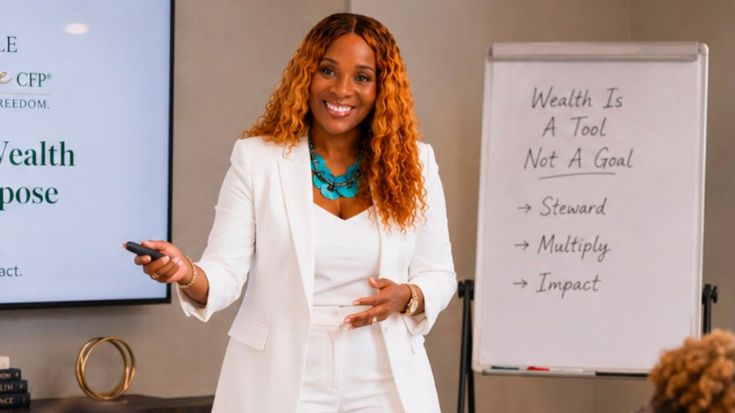
Dr. Nicole delivers practical, compelling presentations that combine financial knowledge, personal experience, resilience, faith, and transformational leadership. Programs can be tailored for conferences, companies, community organizations, faith audiences, associations, and educational institutions.
Frequently asked questions
Before We Begin.
These answers provide a starting point. Specific services, availability, scope, and eligibility can be discussed during the initial consultation.
What happens during the initial strategy call?
The initial conversation is designed to understand your goals, concerns, current circumstances, and the type of support you may need. It also provides an opportunity to determine whether a particular service or engagement is appropriate.
Do I need to have significant assets to work with Dr. Nicole?
Not every service is based on asset level. Educational, consulting, workshop, and recovery-focused engagements may be suitable for people at different stages. Financial planning and advisory eligibility should be discussed directly.
Can services be customized for an organization?
Yes. Workshops, educational series, leadership sessions, and financial-wellness programs can be developed around the goals, audience, timing, and format of the organization.
Are virtual services available?
Many conversations, workshops, and educational programs may be delivered virtually. Availability and any geographic or regulatory limitations should be confirmed when scheduling.
Is financial recovery guidance the same as therapy?
No. Financial recovery guidance focuses on education, organization, preparedness, financial decision-making, and practical next steps. It is not mental-health treatment, counseling, or therapy.
How do I know which service is right for me?
Begin with the strategy call. After learning more about your needs, the appropriate next step can be identified, whether that is a service, educational resource, referral, or another form of support.
The next step
One Conversation Can Bring the Next Step Into Focus.
Schedule a focused strategy call to discuss where you are, what you are working toward, and which service may best support your next season.
Follow Dr. Nicole Here:


Harvest Wealth Financial is not a registered broker-dealer. Harvest Wealth Financial and Vanderbilt Financial Group are separate and unaffiliated entities. Vanderbilt Financial Group is the marketing name for Vanderbilt Securities, LLC and its affiliates. Securities are offered through Vanderbilt Securities, LLC. Member FINRA, SIPC. Registered with MSRB.
Clearing agent: Fidelity Clearing & Custody Solutions Advisory Services offered through Vanderbilt Advisory ServicesClearing agent: Fidelity Clearing & Custody Solutions Insurance Services offered through Vanderbilt Insurance and other agencies.
Supervising Office: 125 Froehlich Farm Blvd, Woodbury, NY 11797 • 631-845-5100.
For additional information on services, disclosures, fees, and conflicts of interest, please visit www.vanderbiltfg.com/disclosures